

Pam Bondi's Thyroid Cancer Diagnosis Highlights the Importance of Early Detection
Recent reports revealed that former U.S. Attorney General Pam Bondi is recovering after being diagnosed with thyroid cancer. While any cancer diagnosis can understandably create concern, the news also provides an opportunity to educate the public about a disease that is often highly treatable when diagnosed early.
During a recent interview with Lourdes Ubieta, CB Oncology's Dr. Serguei Castaneda discussed thyroid cancer, its risk factors, treatment options, and why patients should feel encouraged by the advances made in thyroid cancer care. You can listen to the interview below.
Understanding Thyroid Cancer
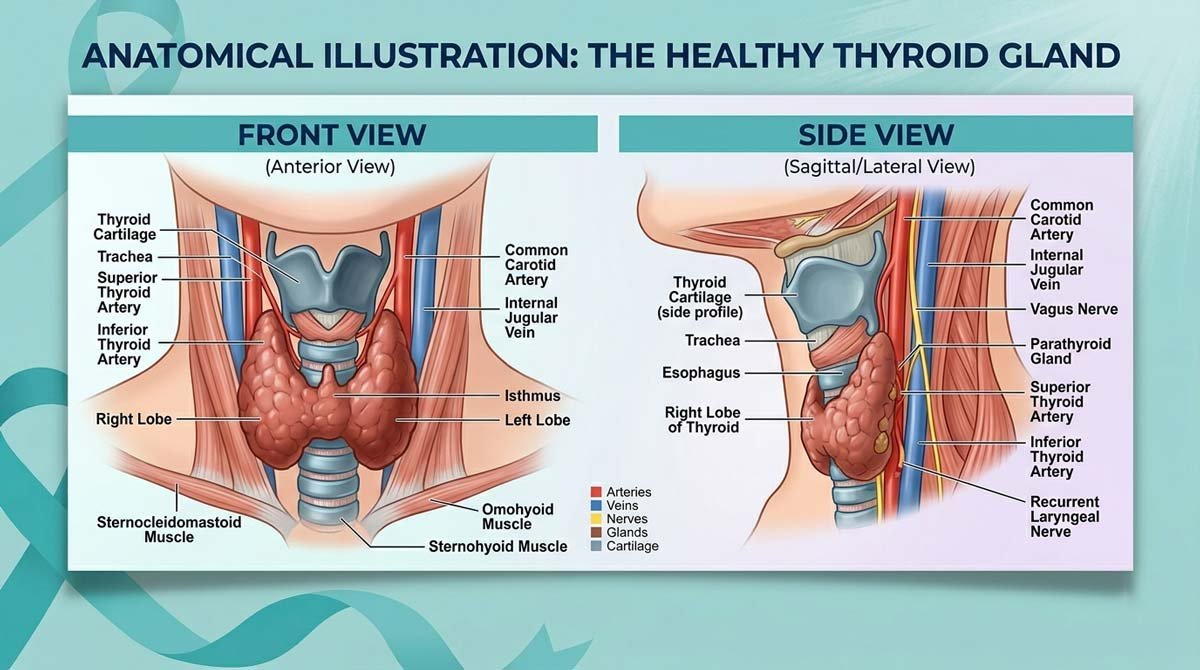
The thyroid is a butterfly-shaped gland located at the front of the neck. It plays a critical role in regulating metabolism, energy levels, heart rate, and many other bodily functions.
When abnormal cells develop within the thyroid gland and begin growing uncontrollably, thyroid cancer can occur. Fortunately, many forms of thyroid cancer have excellent outcomes, especially when detected and treated appropriately.
According to Dr. Castaneda, one of the most important things patients should understand is that not all cancers carry the same prognosis.
"Many thyroid cancers, particularly the most common types, are highly treatable and often curable," Dr. Castaneda explained during the interview.
The Most Common Types of Thyroid Cancer
While there are several forms of thyroid cancer, the two most frequently diagnosed are:
Papillary Thyroid Cancer
Papillary thyroid cancer is the most common type and accounts for the majority of thyroid cancer diagnoses. It typically grows slowly and often responds exceptionally well to treatment.
Follicular Thyroid Cancer
Follicular thyroid cancer is another common form that generally carries a favorable prognosis when identified early and treated appropriately.
According to Dr. Castaneda, determining the exact type of thyroid cancer is one of the most important steps in creating an individualized treatment plan.
Factors such as tumor size, whether nearby lymph nodes are involved, and the patient's overall health all play a role in treatment decisions and long-term outcomes.
What Causes Thyroid Cancer?
Like many cancers, thyroid cancer develops due to genetic changes in cells. However, researchers have identified several risk factors that may increase the likelihood of developing the disease.
Family History
Individuals with a family history of thyroid cancer may face an increased risk of developing the condition themselves.
Thyroid Disease History
Patients with certain thyroid conditions may have a higher likelihood of developing thyroid cancer compared to the general population.
Radiation Exposure
One of the most well-established risk factors is exposure to radiation at a young age.
Dr. Castaneda noted that increased rates of thyroid cancer were observed among populations affected by the Chornobyl nuclear disaster. Additionally, children who receive radiation treatments for certain medical conditions may have an elevated risk decades later.
Gender
Thyroid cancer is diagnosed more frequently in women than in men, though researchers continue to study the reasons behind this difference.
Does Stress Cause Thyroid Cancer?
One of the questions raised during the interview was whether high levels of stress may contribute to thyroid cancer development.
While stress can negatively affect overall health and well-being, Dr. Castaneda explained that there is currently no strong scientific evidence directly linking stress to thyroid cancer.
That does not mean stress should be ignored.
Managing stress through healthy lifestyle habits, regular exercise, adequate sleep, and mental wellness strategies remains an important part of maintaining overall health. However, current research has not established stress as a direct cause of thyroid cancer.
How Is Thyroid Cancer Diagnosed?
In many cases, thyroid cancer is first discovered when a patient notices a lump in the neck or when a thyroid nodule is identified during routine medical imaging.
Diagnosis often begins with an ultrasound examination of the thyroid gland.
If a suspicious nodule is identified, physicians may recommend a procedure known as a fine needle aspiration biopsy. During this procedure, a thin needle is used to collect cells from the thyroid nodule for laboratory analysis.
This minimally invasive test helps determine whether cancer cells are present and guides the next steps in treatment planning.
How Is Thyroid Cancer Treated?
Treatment depends on the type of thyroid cancer, its stage, and whether it has spread beyond the thyroid gland.
Surgery
For many patients, surgery is the cornerstone of treatment.
Head and neck surgeons may recommend removing:
Part of the thyroid gland (partial thyroidectomy)
The entire thyroid gland (total thyroidectomy)
The decision depends on the size, location, and characteristics of the tumor.
Radioactive Iodine Therapy
Some patients may benefit from radioactive iodine treatment after surgery.
Dr. Castaneda explained that thyroid tissue naturally absorbs iodine. By administering radioactive iodine, physicians can target and destroy remaining thyroid cancer cells that may still be present after surgery.
This treatment has helped improve outcomes for many patients with higher-risk disease.
Observation and Monitoring
Not every patient requires additional treatment beyond surgery.
For lower-risk cases, careful monitoring and follow-up may be all that is needed to ensure long-term disease control.
This individualized approach allows physicians to avoid unnecessary treatment while still maintaining excellent outcomes.
A Message of Hope for Patients
News stories involving public figures often remind us that cancer can affect anyone. However, they also provide an opportunity to raise awareness and encourage early medical evaluation.
The encouraging reality is that many thyroid cancers are highly treatable, particularly when diagnosed early and managed by an experienced multidisciplinary medical team.
While every patient's journey is unique, advances in diagnosis, surgery, and targeted therapies continue to improve outcomes for thyroid cancer patients every year.
When Should You See a Doctor?
If you experience any of the following symptoms, it may be worth discussing them with your healthcare provider:
A lump or swelling in the neck
Persistent hoarseness
Difficulty swallowing
Neck discomfort
Enlarged lymph nodes
While these symptoms do not automatically indicate cancer, early evaluation is always the best approach.
Learn More About Your Treatment Options
At CB Oncology, we believe that education is one of the most powerful tools in cancer care. Understanding your diagnosis and treatment options can help you make informed decisions with confidence.
If you have questions about thyroid cancer, radiation therapy, or other cancer treatments, our team is here to help.
Contact CB Oncology today to schedule a consultation and learn more about personalized cancer care options.